EN
 ES
 PT
 FR

Machu Picchu is often called a “lost city”, but it was never a city and it was never completely lost. It was a royal estate built by the most powerful Inca ruler, lived in for less than a century, left behind during the turmoil of the Spanish conquest and known all along to the farmers of the valley. Here is its story, from the stones to the scientists: the version our guides tell at the site, with what recent research has added.
Machu Picchu in key dates
| c. 1420–1450 | Construction begins under the Inca Pachacuti; people already living on the ridge |
| c. 1530s–1570s | The estate empties during the Inca civil war, epidemics and the Spanish conquest |
| 1568 | Colonial documents record the lands of “Picchu” as property of Pachacuti’s descendants |
| 1902 | Agustín Lizárraga, a local farmer, writes his name on a wall of the Temple of the Three Windows |
| 24 July 1911 | Hiram Bingham reaches the ruins, led by Melchor Arteaga |
| 1913 | National Geographic devotes its April issue to Machu Picchu |
| 1981 | Peru creates the Historic Sanctuary of Machu Picchu |
| 1983 | UNESCO lists it as a World Heritage Site, both cultural and natural |
| 2007 | Chosen as one of the New Seven Wonders of the World |
| 2011–2012 | Yale University returns the objects Bingham’s expeditions took to the United States |
Who built Machu Picchu?
Machu Picchu was built by the Incas for Pachacuti Inca Yupanqui, the ruler who turned the small kingdom of Cusco into an empire that would stretch from today’s Ecuador to central Chile. According to the traditional chronology, Pachacuti came to power around 1438 after defeating the Chanka, and campaigned down the Urubamba valley soon after. The ridge between two peaks, wrapped on three sides by the river, became one of his royal estates.
The best evidence for this is a set of Spanish colonial documents from 1568, studied by the historian John Rowe, which describe the lands of “Picchu” as belonging to Pachacuti’s descendants. In 2021 a team led by the archaeologist Richard Burger published new radiocarbon dates from human remains at the site: they show that Machu Picchu was occupied from about 1420, two decades earlier than the date historians had taken from colonial chronicles. The building may therefore have started earlier than once believed: or Pachacuti’s rise itself may need redating.
Why was it built? A royal estate, not a city
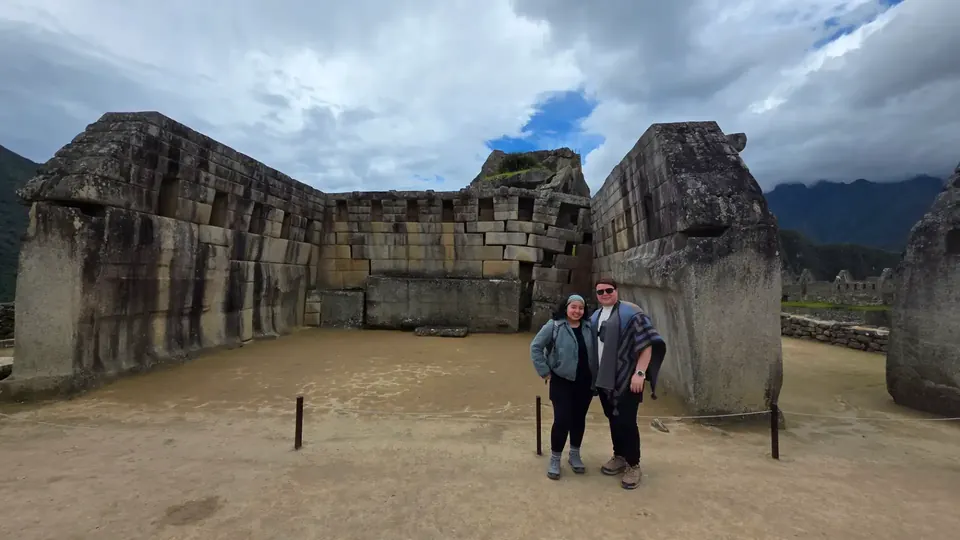
For decades Machu Picchu was described as a fortress, a refuge of the “Virgins of the Sun” or the last Inca capital. Archaeologists now agree on something more down to earth: it was a llaqta, a royal country estate where the ruler, his family and his court could retreat, hold ceremonies and receive guests. Inca rulers founded several such estates; Pisac, Ollantaytambo and Chinchero in the Sacred Valley are its cousins.
The population was small. Studies of the houses and burials suggest that around 750 people lived there at its peak, and fewer when the royal household was away. Most were yanakuna and other retainers, servants, craftsmen, farmers, and a genetic study published in 2023 showed they came from all over the empire, from the coast to the Amazon lowlands. The site also had a strong religious role: temples, carved shrines and buildings aligned with the movements of the sun.
How the Incas built it
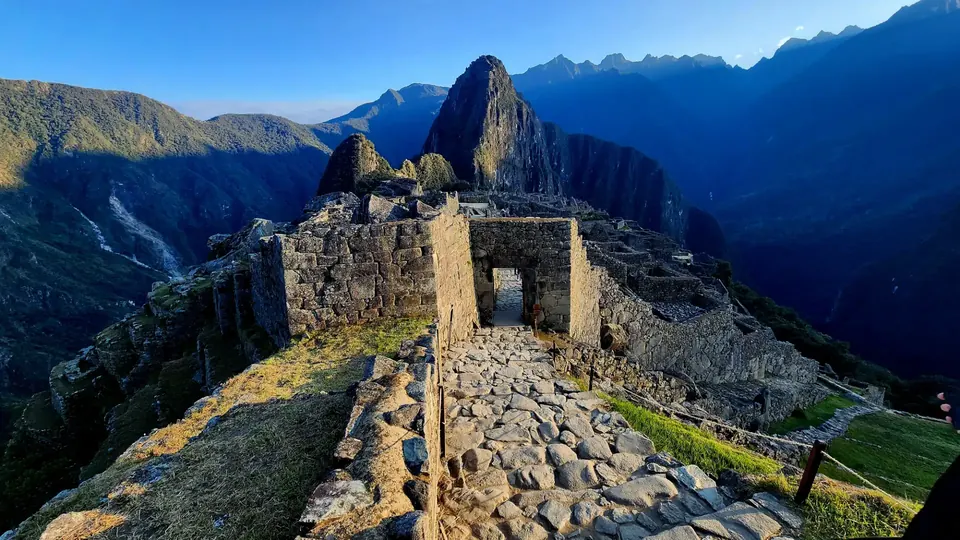
The stone is the mountain itself: the builders quarried the granite of the ridge on site, and a quarry can still be seen inside the citadel. The finest buildings use ashlar masonry, blocks cut and polished to fit so closely that no mortar was needed, while ordinary houses use rougher fieldstone set in clay. Walls lean slightly inwards and doors and windows are trapezoidal, a design that helps the buildings survive the earthquakes of the region.
What visitors cannot see is the most impressive part. Engineers who studied the site estimate that around 60% of the construction lies underground: deep foundations, crushed-stone fill and a drainage system that carries the heavy rains of the cloud forest away from the buildings. A canal brought spring water from the slopes of Machu Picchu Mountain to a chain of sixteen fountains. Thanks to that hidden engineering, the terraces have held for more than five centuries on a ridge where landslides are common.
Tip from our guidesOn the classic route 2-A you walk past the quarry, the Temple of the Sun and the Royal Residence. Ask your guide to point out the difference between ashlar and fieldstone walls: it tells you which buildings mattered most.
The main sectors and buildings
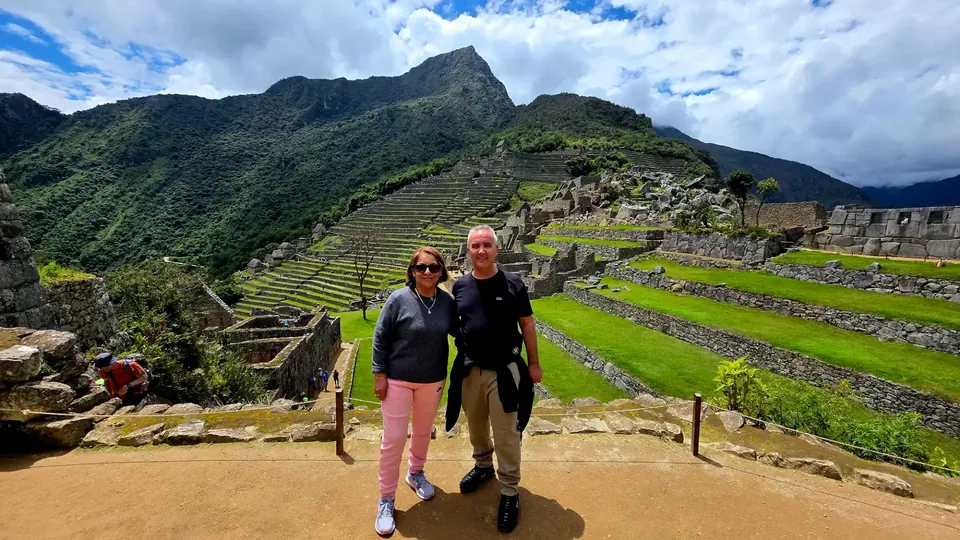
Machu Picchu is divided into an agricultural sector of terraces to the south and an urban sector to the north, separated by a wall and a dry moat. The urban sector itself has an upper half (hanan) and a lower half (hurin) on either side of the central plaza.
- Temple of the Sun (the Torreón): a curved tower built over a natural cave, with a window aligned with the sunrise at the June solstice.
- Royal Residence: the finest dwelling of the site, with its own garden, bath and the first fountain.
- Temple of the Three Windows and Main Temple: the sacred plaza, framed by some of the largest polished blocks of the citadel.
- Intihuatana: a carved granite outcrop at the top of a stepped hill, probably used in ceremonies linked to the sun.
- Temple of the Condor: natural rock and masonry shaped into the outline of a bird with spread wings.
- Sacred Rock: a large flat stone whose profile echoes the mountains behind it.
Which of these you see depends on your ticket: read how the circuits and routes divide the site.
Why was Machu Picchu abandoned?
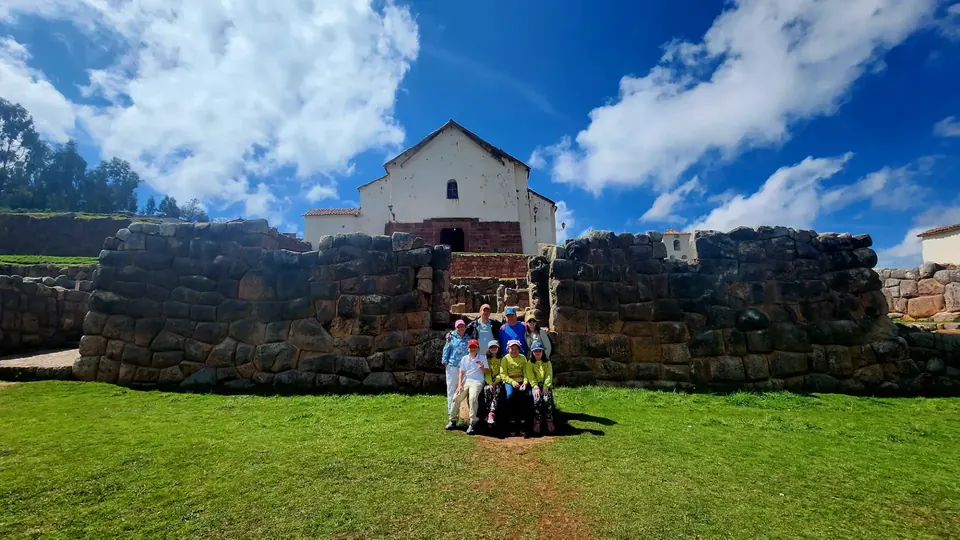
Machu Picchu was lived in for less than a hundred years. In the late 1520s smallpox, brought to the Americas by Europeans, spread ahead of the Spaniards themselves and killed the ruler Huayna Capac. A civil war between his sons Huáscar and Atahualpa followed, and in 1532 Francisco Pizarro captured Atahualpa at Cajamarca. A royal estate depended on the ruler’s family and on labour sent from across the empire; when that system collapsed, there was no reason, and no one, to keep it running.
The estate seems to have emptied gradually over the following decades. Strikingly, the Spaniards left no record of ever reaching Machu Picchu: there are no churches built on its temples, no signs of looting and no mention in the conquest chronicles. That absence is one reason the site survived so well.
Hiram Bingham and the “discovery” of 1911
Machu Picchu was never lost to the people of the valley. Farmers cultivated some of its terraces, and in 1902 a local man, Agustín Lizárraga, wrote his name and the date in charcoal on a wall. When the Yale lecturer Hiram Bingham came down the Urubamba in July 1911 looking for Vilcabamba, the last Inca refuge, a farmer named Melchor Arteaga told him about ruins on the ridge above his house.
On 24 July 1911 Arteaga led Bingham and a Peruvian police sergeant up the slope. At the top they met two families, the Richartes and the Álvarez, who were living and farming among the terraces, and a boy guided them to the buildings. Bingham returned with Yale and National Geographic expeditions in 1912 and 1915, cleared the vegetation, photographed the site and took thousands of objects and remains to the United States. The April 1913 issue of National Geographic made Machu Picchu world-famous.
Bingham believed he had found Vilcabamba; he had not: that was later identified at Espíritu Pampa, deep in the jungle. The objects taken to Yale became the subject of a long dispute with Peru and were returned in 2011 and 2012; many are now displayed at the Casa Concha museum in Cusco.
What does “Machu Picchu” mean?
In Quechua, machu means “old” and pikchu means “peak” or “mountain”, so Machu Picchu is the “old mountain”: the name of the larger peak south of the ruins, which Bingham applied to the whole site. Huayna Picchu means the “young mountain”. We do not know for certain what the Incas called the estate: a 2021 study of colonial documents by the historians Brian Bauer and Donato Amado suggested it may have been known simply as Picchu, or even as Huayna Picchu.
Machu Picchu today
Peru protected the area as the Historic Sanctuary of Machu Picchu in 1981, and UNESCO listed it in 1983 as one of the few sites in the world inscribed for both its culture and its nature: the sanctuary also protects cloud forest, orchids, the Andean bear and the cock-of-the-rock, Peru’s national bird. Since its election as one of the New Seven Wonders in 2007, visitor numbers have grown so much that the Ministry of Culture now limits daily entries, sells timed tickets and sends every visitor along a one-way circuit with a licensed guide.
Those rules exist to make sure the stones last another five centuries. Seeing them with a guide who knows the history is also the best way to understand what you are looking at.
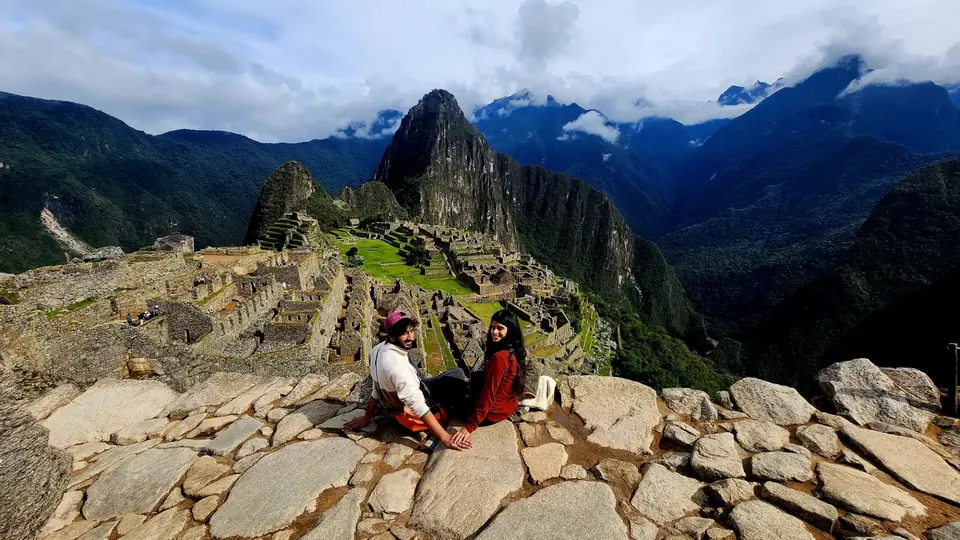 Recommended tour
Machu Picchu Full Day by Train
Full day · From US $375
See the tour →
Frequently asked questions
Who built Machu Picchu?
The Incas, for the ruler Pachacuti Inca Yupanqui, in the 15th century. It was one of his royal estates.
How old is Machu Picchu?
About 600 years. Radiocarbon dates show people living on the site from around 1420.
Why was Machu Picchu abandoned?
It emptied in the 16th century, when epidemics, the Inca civil war and the Spanish conquest broke the royal system that kept it running.
Did the Spanish find Machu Picchu?
There is no record that they ever reached it, which is one reason it survived almost intact.
Who discovered Machu Picchu?
Local farmers always knew it. Hiram Bingham brought it to international attention in 1911, guided by the farmer Melchor Arteaga.