EN
 ES
 PT
 FR

There is no road to Machu Picchu. Almost every visitor reaches Aguas Calientes, the town below the citadel, by train along the Urubamba river, and the train is usually the first thing that sells out. This guide explains which companies run it, how the classes differ, where the trains leave from, what you can carry and roughly what it costs, so you can choose the right one or check what your tour includes.
How the train to Machu Picchu works
The railway follows the Urubamba river from the Sacred Valley down into the cloud forest and ends at Aguas Calientes (officially Machu Picchu Pueblo), at about 2,040 m. From the town, a bus climbs to the citadel in about 25 minutes. So a train ticket does not take you to the ruins themselves: it takes you to the town at their foot.
Most visitors board in Ollantaytambo. The trip from Cusco is a road transfer through Chinchero or Urubamba to the station, then the train. Some services also run from Poroy, a station on the edge of Cusco, and in the rainy season those are often replaced by a bus to Ollantaytambo plus the train (the companies call this a bimodal service).
A second line reaches Aguas Calientes from the other side, from Hidroeléctrica. That is the end of the road route over Abra Málaga, and the train from there takes about 40 to 50 minutes. Many people walk that stretch instead, along the tracks.
PeruRail or Inca Rail: what is the difference?
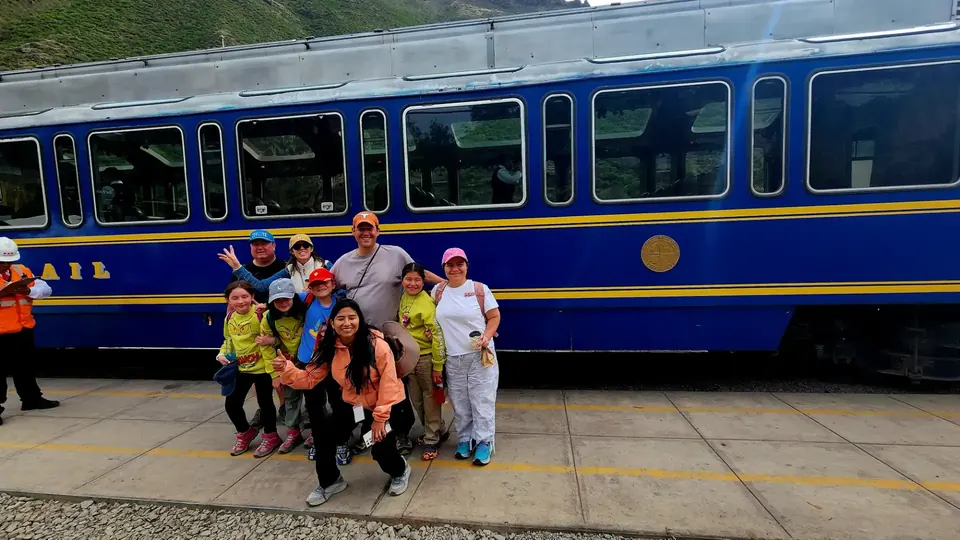
Both companies run on the same single track, at similar times and with similar journey times. The differences are the timetable that suits you, the comfort of each class and the price on your date.
| Level | PeruRail | Inca Rail |
|---|---|---|
| Tourist | Expedition | The Voyager |
| Panoramic | Vistadome, Vistadome Observatory | The 360° |
| Premium | Hiram Bingham (by Belmond) | First Class, Private |
Tourist class (Expedition, The Voyager) has large windows, reclining seats and a drink or a small snack. It is what most organised tours use and it is perfectly comfortable for a 90-minute ride.
Panoramic class (Vistadome, The 360°) adds windows in the roof, better seats, a snack and, on some return trips, music or a small show. The Vistadome Observatory and The 360° have an open-air or observation car for photos.
Premium trains include a full meal and drinks. The Hiram Bingham is a restored luxury train with a guided visit and a meal at the citadel included in the fare.
Tip from our guidesWhatever the class, the scenery is the same. If your budget is tight, spend it on a better Machu Picchu entry time rather than a better train.
Where the trains leave from
- Ollantaytambo (2,792 m): the main station, with departures from early morning to evening. About 1 h 45 min by road from Cusco. The town is worth an hour of your time: the Inca terraces are a five-minute walk from the platform.
- Poroy (near Cusco): a handful of trains, mainly in the dry season. The ride is about 3 h 30 min, slower than going by road to Ollantaytambo.
- Urubamba: a few services, useful if you sleep in the middle of the Sacred Valley.
- Hidroeléctrica: the end of the road route, on the jungle side. Short trains to Aguas Calientes, or a walk of about 2 h 30 min along the tracks.
Timetables change with the season and from year to year, so check the times printed on your ticket and not the ones in an old blog post.
How much does the train cost?
Fares change with the date, the time of day and the demand, a bit like flights. As a rough guide for one way between Ollantaytambo and Aguas Calientes at the time of writing:
| Class | Approximate one-way price |
|---|---|
| Tourist (Expedition, The Voyager) | from about US$ 60 to 90 |
| Panoramic (Vistadome, The 360°) | from about US$ 80 to 130 |
| Premium (First Class, Hiram Bingham) | from about US$ 250 to more than 500 |
Early morning trains and afternoon returns cost more because they suit a day visit. Midday trains are cheaper but leave you less time at the site. A return ticket is simply two one-way fares.
On our tours the round-trip train is already in the price, together with the bus, the entrance ticket and the guide. See the full cost of a Machu Picchu trip for how the numbers add up.
 Recommended tour
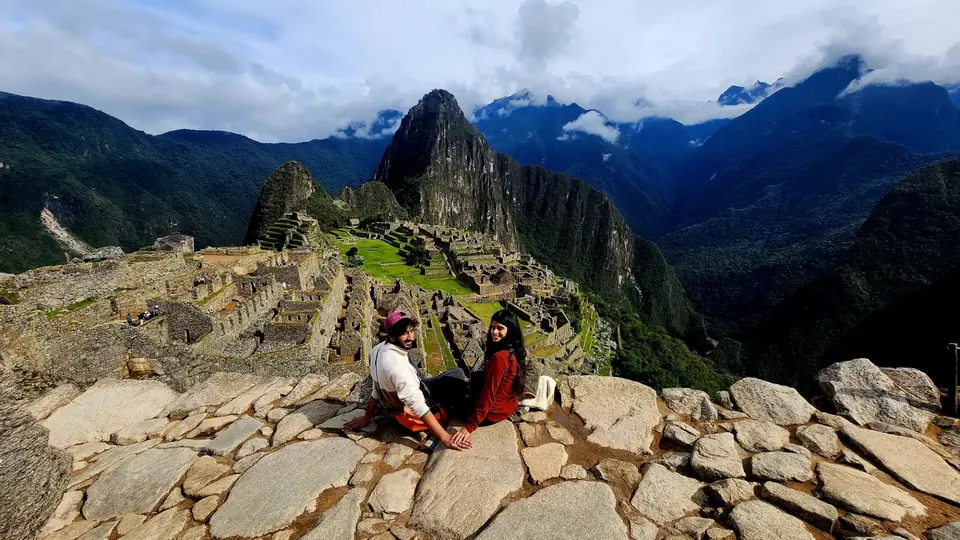
Machu Picchu Full Day by Train
Full day · From US $375
See the tour →
Luggage: the 5 kg rule
In tourist and panoramic class you can take one bag or backpack of about 5 kg (11 lb), with a total size of around 157 cm (62 in) adding length, width and height. There is no hold for suitcases.
In practice that means you leave your big bag in your Cusco hotel, which almost all hotels keep for free, and travel with a daypack. If you stay a night in Aguas Calientes, pack light: a change of clothes, a warm layer, a rain jacket and your toiletries fit easily. Remember that inside Machu Picchu only a small bag is allowed; see the site rules.
On the day: boarding, passport and seats
- Arrive 30 minutes early. Boarding closes a few minutes before departure and the train does not wait.
- Carry your original passport. Staff check the name and number against the ticket at the door, exactly as they do at the gate of Machu Picchu. That is why we ask every traveller’s passport details when you book.
- Seats are assigned and printed on the ticket. On the way to Aguas Calientes the river is mostly on the left, so many travellers prefer that side, but both sides have good views.
- Food and drink: a snack or drink is served in most classes. You can bring a sandwich and water for the ride.
- Coming back: the afternoon trains are the busiest. Be at the Aguas Calientes station on time; the town is small and everything is within ten minutes on foot.
When to book and how to plan the timing
The train, the Machu Picchu entry time and the bus have to fit together, and the entry time is the hardest part to get. That is why it is better to choose the entry hour first and then the trains around it, not the other way round.
- Day trip: a train out before 7:30 AM and a return after 2:30 PM gives you a full guided visit and time for lunch. This is how our full day by train is timed.
- Two days: go in the afternoon, sleep in Aguas Calientes and take one of the first buses up the next morning, like our 2-day train tour. Not sure which suits you? Read one day or two.
- High season (May to September, Easter, late July): book four to eight weeks ahead. In the rainy months two or three weeks is usually enough.
Can you get to Machu Picchu without the train?
Yes, two ways. The road route goes from Cusco over Abra Málaga (4,316 m) to Hidroeléctrica in about six or seven hours, then you walk about 11 km along the tracks or take the short train. It is the cheapest option and it is what our Machu Picchu by car tour does.
On foot, the Classic Inca Trail and the Short Inca Trail reach the citadel through the Sun Gate. Even then, everyone comes back to Cusco by train. All the routes are compared in how to get to Machu Picchu.
Frequently asked questions
How long is the train to Machu Picchu?
From Ollantaytambo to Aguas Calientes it takes about 1 h 30 min to 1 h 50 min. From Poroy, near Cusco, about 3 h 30 min.
Which is better, PeruRail or Inca Rail?
They use the same track and the journey takes the same time. Choose by timetable and price on your date; within the same class the comfort is very similar.
Does the train go to the Machu Picchu ruins?
No. It stops in Aguas Calientes. From there a bus climbs to the citadel in about 25 minutes, or you can walk up stone stairs in about an hour and a half.
Can I take a suitcase on the train?
No. In tourist and panoramic class each traveller can carry one bag of about 5 kg. Leave your suitcase at your Cusco hotel.
Do I need my passport for the train?
Yes. Your name and passport number are on the ticket and staff check the original document when you board.
Is there a train directly from Cusco city?
A few trains leave from Poroy, on the edge of Cusco, mostly in the dry season. Most travellers go by road to Ollantaytambo, which is faster.
Is the train included in your tours?
Yes. Our train tours include the round trip Ollantaytambo to Aguas Calientes, the transfers from your Cusco hotel, the bus, the entrance ticket and the guide.